Baby Fever at Night Only But Not During Day: Should I Go to the ER? (2026)
Medically reviewed by Dr. Ahmad Raza, MD (Pediatrics) — ChildBloom Medical Review Panel. Last updated: August 04, 2026.
Quick Answer: ER or Wait Until Morning? (Decision Tree)
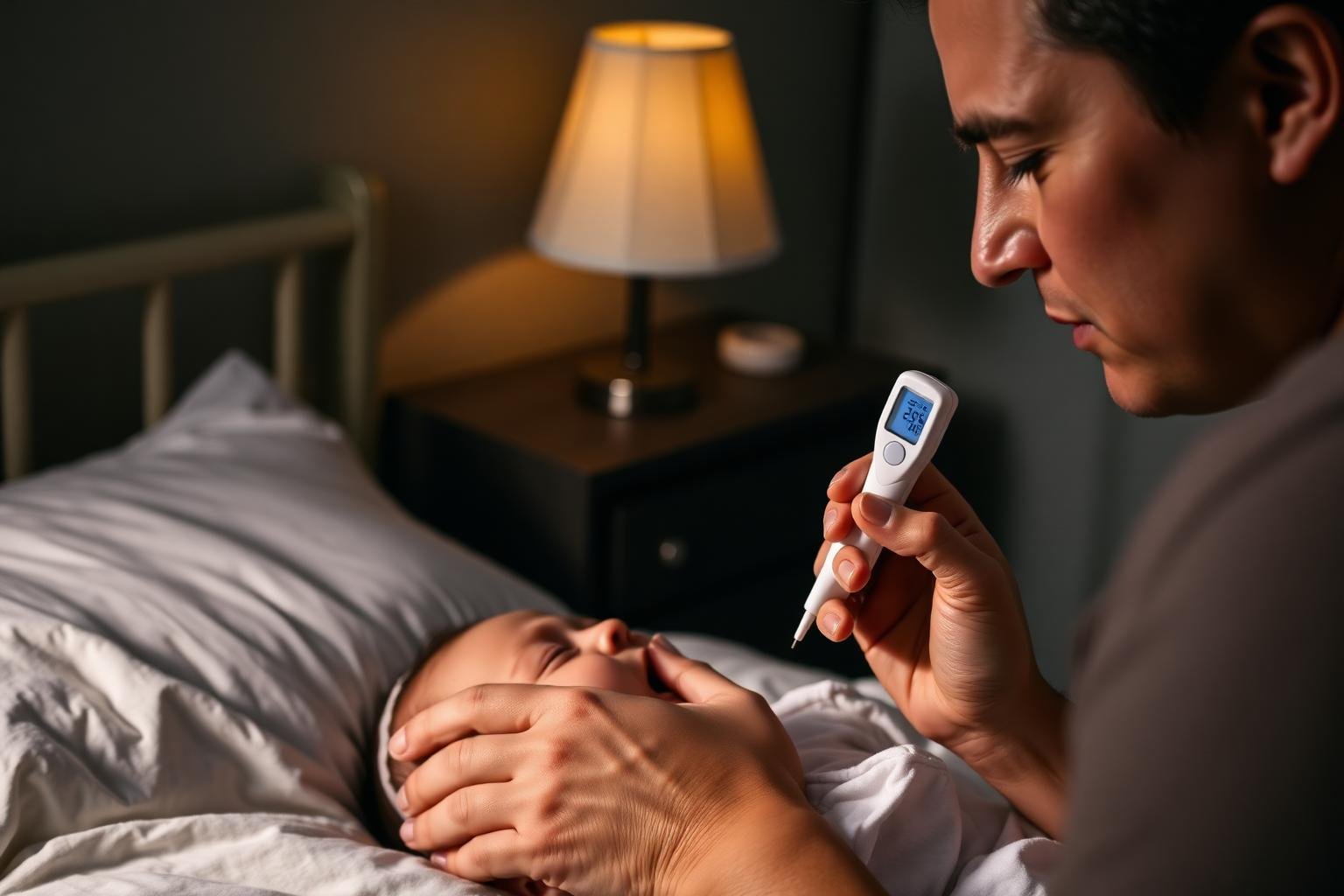
Your baby felt fine all day. Playing, feeding, smiling. Then at bedtime their forehead feels hot and the thermometer reads 100.8°F. Now it’s 11 PM, your pediatrician’s office is closed, and you’re wondering: should I go to the emergency room?
This guide gives you the exact decision framework that pediatric ER doctors use to triage night-only fevers, including the critical age-based rules that determine whether you can safely wait until morning.
| Age | Temperature Threshold | Action |
|---|---|---|
| Under 3 months (0–12 weeks) | Any fever ≥100.4°F (38°C) | 🚑 Go to ER now. Age trumps all other factors. |
| 3–6 months | ≥102°F (38.9°C) | 📞 Call pediatrician now. May need ER based on symptoms. |
| 3–6 months | 100.4–101.9°F | 👁️ Monitor at home. Call in morning. |
| 6–24 months | ≥103°F (39.4°C) | 📞 Call pediatrician now. |
| 6–24 months | Below 103°F, acting normal | ✅ Monitor at home. Can wait until morning. |
Source: AAP Clinical Practice Guideline for Evaluation and Management of Well-Appearing Febrile Infants 8–60 Days Old (Pediatrics, 2021); updated 2026.
Why Fevers Often Appear Only at Night
There’s a biological reason your baby’s temperature spikes at night, and it doesn’t automatically mean the illness is worse. The human body follows a circadian temperature rhythm. Core temperature is lowest in the early morning (around 4–6 AM) and peaks in the late afternoon and early evening (around 4–8 PM). In babies, this natural peak coincides with bedtime, creating the impression that fever appears “only at night.” In reality, the low-grade immune response that was present all day simply crosses the fever threshold when the body’s natural temperature cycle adds 1–1.5°F to the baseline.
What the data shows
A 2026 app-based observational study published in BMC Pediatrics analyzed 28,620 fever episodes from 12,454 children (median age 14 months) and confirmed this pattern precisely. The study found that mean temperature reached its lowest point at 6:00 AM (38.25°C / 100.9°F) and peaked at 11:00 PM (38.93°C / 102.1°F). That’s a trough-to-peak difference of 0.68°C (1.2°F), which is enough to push a borderline daytime temperature into fever range by evening (Beerenbrock et al., BMC Pediatrics, 2026).
The study also found that high-fever measurements (≥39°C / 102.2°F) were least frequent in the early morning (5:00–8:59 AM) and most frequent during late evening and night (9:00 PM–12:59 AM). This means your perception that fevers are worse at night is statistically accurate. The circadian effect is real, measurable, and consistent across age groups.
This doesn’t mean night-only fevers are never serious. But understanding the circadian pattern helps you interpret the number more accurately. A temperature of 100.6°F at 8 PM in an otherwise happy baby is very different from the same temperature at 8 AM.
The Three Questions That Determine Your Next Step
Question 1: How Old Is Your Baby?
Age is the single most important factor in fever decision-making. A fever in a baby under 3 months is always treated differently because their immune system is immature and cannot localize infections effectively. In this age group, a fever may be the only sign of a serious bacterial infection (urinary tract infection, bacteremia, or meningitis) even if the baby appears well otherwise.
The rule is absolute: any temperature ≥100.4°F in a baby under 12 weeks requires immediate medical evaluation, regardless of time of day or night. This is non-negotiable and is the standard of care across every pediatric emergency department in the United States (AAP Clinical Practice Guideline, 2021).
For babies aged 8–60 days, the AAP’s clinical practice guideline breaks evaluation into three age groups: 8–21 days, 22–28 days, and 29–60 days. Each group has specific recommendations for urine testing, blood culture, inflammatory markers, and cerebrospinal fluid analysis. If your baby falls in this range and has a fever, don’t wait, go to the ER.
Question 2: How Is Your Baby Acting?
After age, behavior is the most powerful indicator of illness severity. A baby who has a fever at night but was feeding well, playing, and making eye contact during the day is at much lower risk than a baby who has been lethargic, refusing feeds, or difficult to wake all day. Pediatricians call this the “sick appearance” assessment.
If your baby meets all of the following criteria, home monitoring is generally safe for fevers below 102°F (38.9°C) in babies over 3 months:
- Feeding at least 75% of their normal volume
- Having normal wet diaper output (at least 4–6 in 24 hours)
- Making eye contact and responding to you
- Not crying inconsolably
- No difficulty breathing
- No rash (especially one that does not blanch when pressed)
Question 3: What Is the Exact Temperature and How Was It Measured?
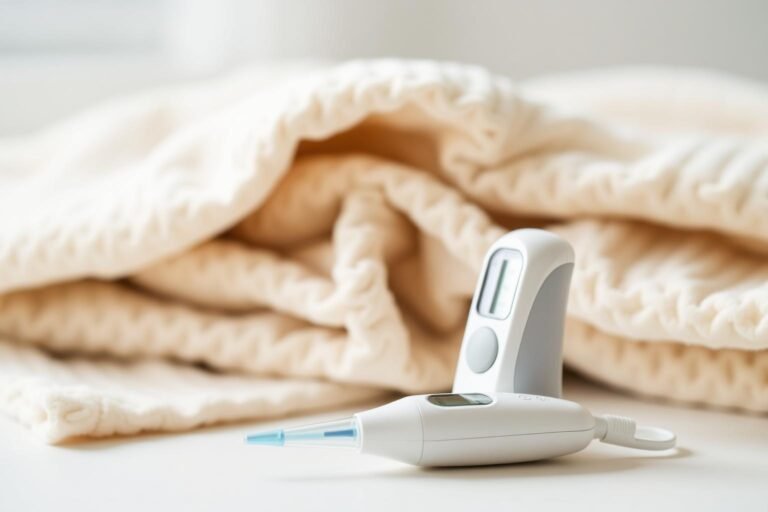
Not all thermometers and measurement methods are equal. For accurate fever assessment in infants and young children:
| Method | Accuracy | Notes |
|---|---|---|
| Rectal | Gold standard | Most accurate for babies under 12 months. Only method that should guide ER decisions. |
| Temporal artery (forehead) | Good for screening | Can be off by 0.5–1.0°F. Confirm with rectal if reading is near threshold. |
| Axillary (underarm) | Underestimates | Reads 0.5–1.0°F lower than core. Add 1°F for estimate. |
| Ear (tympanic) | Moderate | Accurate for babies over 6 months. Affected by earwax and positioning. |
| Pacifier / forehead strips | Not reliable | Do not use for medical decision-making. |
Always document the time of measurement, the method used, and the exact number. This log is invaluable if you end up calling your pediatrician or going to the ER.
Common Causes of Night-Only Fever (With No Daytime Symptoms)
1. Mild Viral Illness (Most Common)
The vast majority of night-only fevers are caused by mild viral infections that the baby’s immune system is fighting off effectively. The fever is the immune system’s natural response. Raising body temperature makes it harder for viruses to replicate. During the day, the immune response may be below the fever threshold, but the circadian temperature rise in the evening pushes it over. These fevers typically last 2–3 nights and resolve on their own without treatment.
2. Overbundling and Room Temperature
This is the most common non-infectious cause of apparent night fever. A baby who is dressed in fleece pajamas, a heavy sleep sack, and a blanket in a room that is 74°F+ can easily register a temperature of 99.5–100.3°F simply from heat retention, especially if measured with a forehead or armpit thermometer. Strip the baby down to a diaper, wait 30 minutes, and recheck. If the temperature drops by more than 0.5°F, the cause was environmental, not infectious.
3. Post-Vaccination Fever
Vaccines, particularly the DTaP and MMR, can cause low-grade fever that peaks 6–12 hours after administration and may appear only at night. This is a normal immune response and typically resolves within 24–48 hours. If your baby was vaccinated within the last 48 hours, consider this as the likely cause, but still follow the age-based guidelines above.
4. Teething (Controversial)
Teething can cause a slight elevation in temperature (typically 99.5–100.3°F), but it does not cause true fever (≥100.4°F). If your baby’s temperature is above 100.4°F, teething is not the cause. Look for an infection. This is a common misconception that leads parents to miss treatable ear infections and urinary tract infections.
5. Urinary Tract Infection (UTI)
UTIs are one of the most commonly missed causes of fever in infants. The AAP reports that more than 10% of febrile infants are diagnosed with a urinary tract infection. In baby girls, who have a higher risk due to shorter urethras, a UTI can present with fever as the only symptom. No cough, no runny nose, no diarrhea. The fever may be intermittent and appear only at night. If your baby has unexplained fever without respiratory symptoms, especially if the fever persists beyond 3 days, a urinalysis may be needed.
Safe Fever Management at Home (When ER Is Not Needed)
Comfort Measures First
Before reaching for medication, try these non-pharmacologic measures. Remove excess clothing down to a single layer (or just a diaper), lower the room temperature to 68–72°F, offer extra breastmilk or formula (hydration helps the body regulate temperature), and use a cool (not cold) washcloth on the forehead and neck. These measures can lower temperature by 0.5–1.0°F and often make the baby comfortable enough to sleep.
When to Use Fever Reducers
Fever reducers (antipyretics) should be used for comfort, not for fever number. A baby who is sleeping comfortably at 101.5°F does not need medication. A baby who is crying, fussy, and unable to sleep at 100.8°F may benefit. The goal is comfort, not a normal temperature reading.
Approved medications:
- Acetaminophen (Tylenol): Safe for babies over 8 weeks (2 months). Dose: 10–15 mg/kg every 4–6 hours, not exceeding 5 doses in 24 hours. Use weight-based dosing, not age-based. Example: A 6 kg (13 lb) baby gets 60–90 mg per dose.
- Ibuprofen (Motrin/Advil): Safe for babies over 6 months (and over 12 lbs / 5.4 kg). Dose: 5–10 mg/kg every 6–8 hours, not exceeding 4 doses in 24 hours. More effective than acetaminophen for fevers above 102°F. Example: A 8 kg (18 lb) baby gets 40–80 mg per dose.
- Do not alternate unless recommended by your pediatrician. Alternating medications increases the risk of dosing errors and is not more effective for fever control.
The Morning-After Protocol: What to Do When Daylight Comes
If you safely monitored through the night and did not go to the ER, here is the step-by-step morning protocol:
- Take a morning temperature immediately upon waking. This is typically the lowest temperature of the day and gives you the true baseline.
- Assess feeding. Offer the first feed and observe. Is the baby taking a normal volume? Latching well? Keeping it down?
- Assess behavior. Is the baby making eye contact, smiling, interested in toys or surroundings? Or is the baby lethargic, irritable, or difficult to engage?
- Check wet diapers. Count from the previous morning. At least 4–6 wet diapers in 24 hours is the minimum.
- Check for new symptoms. Cough, congestion, diarrhea, vomiting, rash, ear tugging. Any symptom that was not present the night before.
- Make the decision. If morning temperature is normal and baby is acting well, continue home monitoring. If fever returns or any new symptom appears, call your pediatrician for a same-day appointment.
Dehydration Signs: What to Watch for When Your Baby Has a Fever
Fever increases fluid loss through the skin and breathing, making dehydration a real concern. The most reliable early sign of dehydration in infants is decreased urine output. Fewer than 4 wet diapers in 24 hours for a baby under 6 months, or fewer than 3 wet diapers in 24 hours for an older baby.
Other signs: dry mouth and lips (the inside of the cheek feels sticky or dry), no tears when crying, sunken fontanelle (the soft spot on top of the head appears sunken or depressed), sunken eyes, decreased skin elasticity (pinch the skin on the belly, if it stays tented instead of snapping back, this is a late sign), and lethargy or excessive sleepiness.
If you see any sign of dehydration alongside a fever, call your pediatrician. The combination of fever and dehydration often requires medical evaluation even if the temperature itself is not dangerous.
Roseola: The Classic Night-Fever Illness Every Parent Should Know
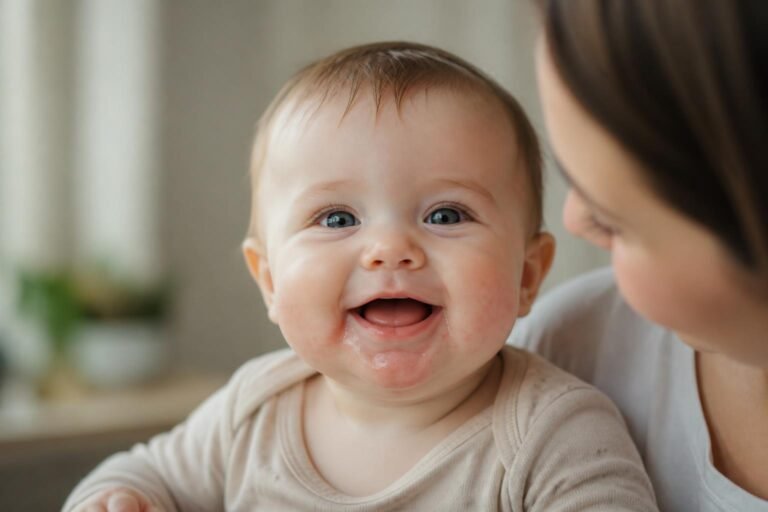
Roseola (also called sixth disease or exanthem subitum) is a viral illness that causes a characteristic pattern: high fever, often 102–104°F, that appears only at night for 3–5 days, then suddenly resolves, followed by a pink rash that appears on the trunk and spreads to the arms and legs. The rash is not itchy, not painful, and fades within 1–2 days.
Roseola is extremely common. Nearly all children contract it by age 2. It is generally harmless. The challenge for parents is that the fever phase offers no clues about the cause. The baby may have a dramatically high fever at night but seem completely normal during the day. The diagnosis becomes clear only when the fever breaks and the rash appears.
If your baby has had high night-only fevers for 3–4 days without respiratory symptoms, roseola is the most likely explanation. The rash confirmation is reassuring. Once the rash appears, the fever is gone and the illness is over.
When a Night Fever Is the First Sign of Ear Infection
Acute otitis media (middle ear infection) commonly presents with fever that appears worse at night. This is because lying flat increases pressure in the middle ear, making the infection more painful when the baby is lying down.
Clues that a night fever is ear-infection-related: the baby is fussy when lying flat but calmer when held upright, the baby pulls or tugs at one or both ears, the fever is accompanied by poor feeding (sucking worsens ear pain), there may be drainage from the ear, and the baby may have had a cold or congestion in the preceding days.
If two or more of these clues are present alongside a night fever, call your pediatrician for a same-day ear check. Ear infections require antibiotic treatment and do not resolve on their own.
Fever Phobia: Why Parents Overestimate Night Fevers (And Why That Matters)
A well-documented phenomenon called “fever phobia” causes parents to overestimate the danger of fever, leading to unnecessary ER visits, overuse of fever-reducing medications, and significant sleep disruption for the entire family. Studies consistently show that parents believe fevers cause brain damage at temperatures far below the danger threshold. True heatstroke-level danger begins above 107°F (41.7°C), a temperature almost never reached from infection alone.
Understanding the actual danger levels can help you make calmer decisions at 2 AM:
- 100.4–102°F (38–38.9°C): The body’s normal immune response. Does not require suppression.
- 102–104°F (38.9–40°C): Uncomfortable but not dangerous for a baby over 3 months.
- Above 105°F (40.5°C) or any fever in babies under 3 months: Warrants immediate medical attention.
The fever number itself is far less important than how the baby is acting. Pediatricians call this “sick appearance” over thermometer number. A baby with a temperature of 103°F who is playing and feeding is less concerning than a baby with 101°F who is lethargic and refusing to feed.
When to Call Your Pediatrician
A single night of fever in a baby over 3 months who is acting normally during the day rarely requires an ER visit. But age is the absolute rule: any fever ≥100.4°F in a baby under 12 weeks always requires immediate medical evaluation, regardless of how well the baby appears.
For babies over 3 months, trust your gut. If something feels wrong, call. A phone call is free, takes 5 minutes, and can save you 5 hours in a waiting room.
Frequently Asked Questions
My baby’s head feels hot but the thermometer says normal. Is that a fever?
A hot forehead without a fever on the thermometer is usually environmental. The baby has been lying on that side, or the room is warm. Trust the thermometer, not the touch.
Should I wake my baby to give fever medicine?
No. If your baby is sleeping comfortably, do not wake them to give medication. Sleep is more important for immune function than a slightly lower temperature.
Can a night-only fever be a sign of teething?
Teething can cause a slight temperature elevation (up to 100.3°F) but not a true fever (≥100.4°F). Any temperature above 100.4°F is not teething.
Is it safe to give acetaminophen and ibuprofen together?
No. Alternating or combining them increases the risk of dosing errors. Pick one medication and use it at the correct weight-based dose.
My baby had a fever at night but was fine all day yesterday. Is it safe to skip the pediatrician visit?
If the baby is over 3 months, acting normally during the day, feeding well, and the fever does not return the next night, you do not need to call. If the pattern repeats for a third night, call your pediatrician.
How accurate are no-touch forehead thermometers for babies?
Less accurate than rectal or temporal artery thermometers. They can be off by 0.5–1.5°F. Use them for screening only. Confirm with a rectal reading before making an ER decision.
Why does my baby only have a fever at night and never during the day?
The circadian temperature rhythm adds 1–1.5°F to your baby’s baseline in the evening. A low-grade immune response that stays below the fever threshold during the day can cross it at night. A 2026 study of 28,620 fever episodes confirmed this pattern peaks at 11 PM. If the pattern persists beyond 3–5 nights or repeats frequently, see your pediatrician to rule out UTI or other hidden causes.
What counts as a fever in babies and how should I measure it?
A rectal temperature of 100.4°F (38°C) or higher is considered a fever in infants. Rectal measurement is the gold standard for babies under 12 months. Temporal artery thermometers are acceptable for screening. Add 1°F to axillary (underarm) readings. Ear thermometers work for babies over 6 months.
References and Further Reading
- Beerenbrock Y, Jenetzky E, et al. “Diurnal variations of fever in children: results from an app-based observational study.” BMC Pediatrics. 2026;26:719. DOI: 10.1186/s12887-026-07432-y
- American Academy of Pediatrics. “Clinical Practice Guideline for the Evaluation and Management of Well-Appearing Febrile Infants 8–60 Days Old.” Pediatrics. 2021;148(2):e2021052228.
- AAP Patient Care — Infant Fever Overview. aap.org (Updated July 2026)
- CDC — Fever Facts. cdc.gov/fever
- NHS — Fever in Children. nhs.uk
- Children’s Hospital of Philadelphia — Febrile Infant Clinical Pathway. chop.edu
Related Reading on ChildBloom
- Fever in Infants: When to Worry (2026 Guide)
- Baby Breathing Fast While Sleeping: When to Worry
- When to Worry About a Baby’s Cough
- Post-Vaccine Fussiness: Timeline Guide
- Newborn Fever: When to Call the Doctor
Medical Disclaimer
This article is for general education and is not a substitute for individual medical advice, diagnosis, or treatment. Every child is different. Talk to your own pediatrician about your baby, and seek urgent care for breathing difficulty, poor feeding, dehydration, unusual sleepiness, fever in an infant under 3 months, or any sudden change in your child’s condition.