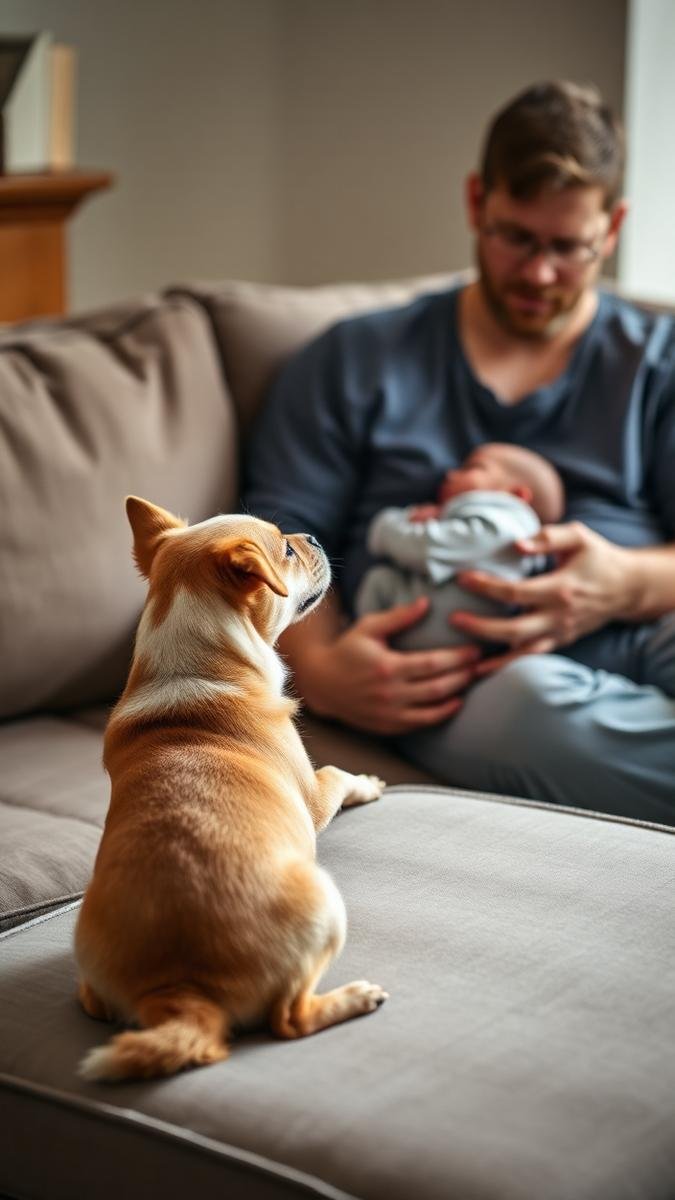
Bringing Baby Home to a Dog or Cat: Pet Safety with Newborns
Medically reviewed by Dr. Ahmad Raza, MD (Pediatrics) — ChildBloom Medical Review Panel. Last updated: August 03, 2026.
Editorial & affiliate disclosure: our guidance is written and reviewed by clinicians. ChildBloom may earn a commission from qualifying purchases made through links on this page, which never changes what our pediatric reviewers recommend.
If you are searching for answers about bringing baby home to a dog, you are in the right place. This pediatrician-reviewed guide explains what is normal, what the likely causes are, the red flags that mean you should call your doctor, and what you can safely do at home — all based on current AAP, CDC and NIH guidance on bringing baby home to a dog.
Bringing a new baby home is exciting — but if you have pets, it’s also a major transition for your furry family members. As a pediatrician and pet owner, I understand the concern parents feel about introducing their baby to a dog or cat. With proper preparation, most pets adjust beautifully to the new family member. Here’s how to make the transition safe and smooth for everyone. This guide covers how to introduce newborn to dog safely first day home to help parents make informed decisions.
Preparing Your Pet Before Baby Arrives

During Pregnancy (2–3 months before due date)
- Introduce new sounds and smells: Play recordings of baby sounds (crying, cooing) at low volume while giving treats. Bring home baby items (lotion, diapers) for your pet to sniff before the baby arrives.
- Practice boundaries: If your pet isn’t allowed on the nursery furniture, start enforcing that rule now. Install any baby gates your pet will need to learn.
- Practice handling: Gently touch your pet’s paws, ears, and tail — areas a baby might grab. Reward calm tolerance.
- Update training: Reinforce basic commands — sit, stay, down, leave it. A well-trained pet is a safer pet around a baby.
- Change routines gradually: If walks will be shorter or feeding times will change after the baby arrives, start adjusting now.
- Vet check: Ensure vaccinations, flea/tick prevention, and deworming are up to date.
The First Introduction (From the Hospital)
Furthermore, before bringing baby home, have your partner bring home an item with the baby’s scent — a used swaddle or onesie. Let your pet sniff it in a calm environment. This familiarizes them with the baby’s smell before the actual meeting.
The First Meeting
- Keep your pet on a leash (if a dog) or in a carrier (if a cat)
- Have one adult manage the pet and another hold the baby
- Stay calm and positive — your pet picks up on your energy
- Let your pet sniff the baby’s feet from a safe distance
- Reward calm behavior with treats and praise
- Keep the first meeting short — 5–10 minutes is enough
- Never force interaction — let your pet approach at their own pace
Safety Rules for Living With Pets and Babies
- Never leave a baby or toddler alone with any dog or cat — no matter how gentle or well-trained. Most pet-related injuries to children happen with a family pet, not a stranger’s.
- Create safe zones: Your pet needs spaces where the baby cannot go — a crate, a bed behind a gate, or a separate room. This gives them a retreat when they need a break.
- Supervise all interactions: An adult should be within arm’s reach whenever your pet and baby are together.
- Watch for stress signals in your pet: Yawning, lip licking, tucked tail, whale eye (showing the whites of the eyes), growling, snapping, or moving away. If you see these, separate your pet from the baby.
- Respect your pet’s body language: If your pet walks away from the baby, don’t call them back. Let them choose their distance.
- Never punish growling: A growl is a warning — your pet is communicating discomfort. Punishing growling can suppress the warning, leading to a bite without warning next time.
Managing Jealousy and Attention-Seeking
Pets can become jealous when a new baby gets all the attention. Signs of jealousy include: getting between you and the baby, whining or barking when you feed the baby, toileting in inappropriate places, destructive behavior, or decreased appetite. To manage this:
- Give your pet dedicated one-on-one time daily — even 10 minutes of focused attention matters
- Include your pet in baby activities when safe — let them lie nearby during floor time
- Maintain regular feeding, walking, and play schedules
- Use food puzzles and enrichment toys to keep your pet mentally stimulated
- Consider hiring a dog walker if you can’t provide enough exercise in the early weeks
Cats and Babies: Special Considerations
Cats have different needs than dogs. The most common concern is a cat jumping into the crib. Prevent this by: using a crib net or mesh crib cover when the baby isn’t in the crib, keeping the nursery door closed when the baby is napping unattended (with a baby monitor), providing alternative high perches for your cat (cat trees, shelves), and using double-sided tape on the crib edges (cats dislike the texture). Most cats will naturally avoid a crying, squirming baby. Introduce gradually and give your cat escape routes. For expert-reviewed guidance, the American Academy of Pediatrics offers reliable information on this topic.
Dogs and Babies: Breed-Specific Considerations
For example, any dog can be safe around a baby with proper training, and any dog can bite — regardless of breed. However, some breeds have higher prey drives or lower tolerance for handling. If you have a breed known for guarding or high prey drive, be extra vigilant. The most important factor is your dog’s individual temperament, training history, and your ability to supervise. If you have concerns about your dog’s behavior around the baby, consult a certified professional dog trainer or veterinary behaviorist — before the baby arrives.
When Your Baby Becomes Mobile
Once your baby starts crawling and walking, the dynamics change. Your baby may chase your pet, pull fur, grab ears, or try to take their toys. This is when most pet-related injuries occur. Teach your toddler gentle touching (“soft hands”), supervise all interactions, and ensure your pet has escape routes. Never allow your toddler to approach a pet who is eating, sleeping, or chewing a toy — these are the most common scenarios for bites.
Frequently Asked Questions
What if my dog growls at the baby?
A growl is a warning, not a failure. Separate them immediately and assess the situation. Did the baby grab the dog’s ear? Was the dog eating or sleeping? Respect the warning and manage future interactions more carefully. Never punish growling — it may suppress the warning and lead to a bite without warning. Consult a professional trainer or behaviorist if growling continues.
Can my cat sleep in the same room as my baby?
As a result, it’s safer to keep the cat out of the nursery when the baby is sleeping. Cats may jump into the crib for warmth, which could accidentally suffocate a young infant. Use a baby monitor and keep the door closed during naps.
Should I get rid of my pet because of the baby?
In most cases, absolutely not. With proper preparation, supervision, and training, pets and babies can live together safely and happily. Pets provide emotional support, teach responsibility, and enrich a child’s development. Exceptions exist if a pet has a history of aggression or severe anxiety — in these rare cases, consult your veterinarian or a behaviorist for guidance.
Introducing Baby to Your Cat
Cats often need more time than dogs to adjust to a new baby. Start by bringing home the baby’s scent on a blanket or onesie. Let your cat explore the nursery and baby items before the baby arrives. When you bring baby home, let your cat approach at their own pace.
In addition, never force interaction. Provide high perches and escape routes so your cat can observe from a safe distance. Maintain your cat’s routine as much as possible — feeding times, play sessions, and cuddle time. A stressed cat may urinate outside the litter box, hide, or become aggressive. If you notice these signs, consult your veterinarian for behavior management strategies.
Pets and Allergies in Children
There’s good news for pet-owning families: growing up with pets may actually reduce the risk of allergies and asthma. Research suggests that children who live with dogs or cats in the first year of life have lower rates of pet allergies, environmental allergies, and asthma.
This is thought to be related to early exposure to diverse microbes (the hygiene hypothesis). If you have a family history of severe allergies, talk to your pediatrician and allergist about whether early pet exposure is right for your child. In most cases, the benefits of pet ownership — companionship, emotional support, and potential allergy protection — outweigh the risks.
The Bottom Line
Specifically, pets are family, and introducing them to a new baby takes patience, preparation, and ongoing supervision. With the right approach, your pet can become your baby’s first best friend. Trust your instincts, respect your pet’s boundaries, and never compromise safety — your baby’s and your pet’s.
Preparing Your Pet for Baby: A Timeline
Start preparations 2-3 months before your due date. Month 3: Vet check, update vaccinations, and address any behavior concerns. Month 2: Introduce baby sounds and scents, practice boundaries, install baby gates, and adjust routines.
Month 1: Set up nursery equipment and let your pet explore it, practice calm greetings at the door, and finalize your introduction plan. Week 1: Send home a scent item from the hospital. The more prepared your pet is, the smoother the transition will be. If you have specific concerns about your pet’s behavior, consult a certified professional dog trainer or veterinary behaviorist before the baby arrives.
Children and Pet Safety: Teaching Respect
Additionally, as your baby grows into a toddler and preschooler, teach them how to interact safely with pets. Key lessons: use “gentle hands” (soft touches, no hitting, pulling, or grabbing), don’t approach a pet who is eating, sleeping, or chewing a toy, don’t hug pets tightly (many dogs and cats dislike this), don’t bother pets in their safe space (crate, bed, behind a gate), and always ask before petting someone else’s pet. Model these behaviors yourself — your child learns from watching you.
Introducing your baby to your pets is a gradual process that requires patience, preparation, and ongoing supervision. With the right approach, your pet can become your child’s first and most loyal friend. The bond between children and pets is one of the most special relationships in life — and it starts with a safe, thoughtful introduction. Take it slow, respect your pet’s boundaries, and never compromise on safety.
When to Consult a Professional
If your pet shows signs of aggression, extreme fear, or significant behavior changes after the baby arrives, consult a professional. Start with your veterinarian to rule out medical causes. Then consider a certified professional dog trainer (CPDT-KA), a veterinary behaviorist (board-certified, DACVB), or a cat behavior consultant.
However, these professionals can create a behavior modification plan tailored to your pet and family. Most behavior issues can be resolved with proper guidance. Euthanasia or rehoming should be a last resort, discussed with your vet and family, and considered only if there’s a genuine safety risk that cannot be managed through training and management.
The Benefits of Growing Up With Pets
Despite the challenges, growing up with pets offers remarkable benefits for children. Studies show that children who grow up with pets have: lower rates of allergies and asthma, stronger immune systems, improved social skills and empathy, reduced stress and anxiety, better emotional regulation, increased physical activity, and a sense of responsibility and companionship. The bond between a child and their pet is one of the most special relationships in life. With proper management, the benefits far outweigh the challenges.
Pet Proofing Your Home for Baby
Just as you babyproof your home, you should also “pet proof” for the baby. Secure your pet’s food and water bowls where the baby can’t reach them (babies love splashing in water bowls). Move pet beds to areas where the baby won’t bother the pet. Keep litter boxes in areas inaccessible to crawling babies (toxoplasmosis risk). Store pet medications and flea/tick treatments out of reach. Remove pet toys with small parts or squeakers that could be choking hazards. Keep pet hair and dander under control with regular vacuuming and grooming. These steps protect both your baby and your pet.
Moreover, bringing a baby home to a pet requires patience, preparation, and ongoing supervision — but the rewards are immense. The bond between a child and their first pet is one of life’s greatest joys. With the right approach, your pet will become your child’s first best friend.
Pets enrich our lives in countless ways, and with thoughtful planning, they can be a wonderful part of your child’s life too. The key is preparation, supervision, and respect — for your baby’s safety and your pet’s needs. With these in place, the bond between your child and their pet will be one of the most meaningful relationships of their life.
Read more: room by room babyproofing checklist for
Furthermore, This content is for informational purposes only and does not substitute professional medical advice or veterinary advice. Always consult your pediatrician and veterinarian with specific concerns.
Clinical Pearl: What the Research Actually Says
One of the most valuable skills a parent can develop is the ability to evaluate health information critically. In the age of social media and parenting influencers, misinformation about child health spreads faster than evidence-based guidance. When you encounter a new parenting recommendation — whether about sleep, feeding, development, or safety — ask yourself three questions: Who is making this recommendation and what are their credentials? Is the recommendation supported by peer-reviewed research or is it based on anecdote and tradition?
Does the recommendation align with guidance from major medical organizations like the American Academy of Pediatrics, the Centers for Disease Control and Prevention, or the World Health Organization? If a recommendation contradicts established medical guidance, it should be viewed with skepticism, regardless of how compelling the testimonial may be. When in doubt, bring what you have read or heard to your pediatrician. We are trained to help you separate evidence from anecdote and to make decisions that are right for your individual child.
For example, Related: newborn bath safety tips for water temperature and technique
Bringing Baby Home to a Dog or Cat: quick pediatrician summary
Most of the time this is a normal newborn or infant variation that settles on its own, and the job of a parent is to know the small number of red flags that change the plan. Watch feeding, breathing, alertness and wet diapers — those four tell you more than the symptom itself. Call your pediatrician the same day for fever in a baby under 3 months, laboured or fast breathing, refusal to feed, fewer wet diapers, unusual floppiness or sleepiness, or a symptom that is clearly getting worse rather than better.
Common mistakes parents make
- Treating a single measurement or one bad day as a trend instead of watching the pattern over several days.
- Trying several remedies at once, so it becomes impossible to tell what helped.
- Waiting for a convenient time to call when a red flag is already present — feeding, breathing and alertness changes are always worth a same-day call.
- Following advice from an unsourced social post rather than your own pediatrician, who knows your child’s history and growth curve.
Related guides from our pediatric team
- Newborn Stroller Safety: From Bassinet Attachments to Hot Days
- Newborn Bath Safety: Water Temperature, Drowning Prevention, and Technique
- Newborn Home Environment: Temperature, Air Quality, and Alarms
- Newborn Car Seat Safety: A Complete Guide for Parents
- More expert answers in Pediatrician’s Corner
References and further reading
- AAP HealthyChildren: symptoms & when to call the doctor
- CDC child health & development
- NIH MedlinePlus infant and newborn care
Medical disclaimer
This article is for general education and is not a substitute for individual medical advice, diagnosis or treatment. Every child is different — talk to your own pediatrician about your baby, and seek urgent care for breathing difficulty, poor feeding, dehydration, unusual sleepiness, fever in an infant under 3 months, or any sudden change in your child’s condition.





2 Comments