Newborn Reflexes Explained: Moro, Rooting, Grasp & More
Medically reviewed by Dr. Ahmad Raza, MD (Pediatrics) — ChildBloom Medical Review Panel. Last updated: August 03, 2026.
Editorial & affiliate disclosure: our guidance is written and reviewed by clinicians. ChildBloom may earn a commission from qualifying purchases made through links on this page, which never changes what our pediatric reviewers recommend.
If you are searching for answers about newborn reflexes explained, you are in the right place. This pediatrician-reviewed guide explains what is normal, what the likely causes are, the red flags that mean you should call your doctor, and what you can safely do at home — all based on current AAP, CDC and NIH guidance on newborn reflexes explained.
One of the most fascinating things about newborns is the set of primitive reflexes they’re born with — involuntary movements that tell us their nervous system is developing exactly as it should. As a pediatrician, I check these reflexes at every well-child visit in the first few months. Here’s what each one looks like and what it means. This guide covers newborn jerking arms while sleeping but not crying is it normal to help parents make informed decisions.
What Are Newborn Reflexes?

Furthermore, newborn reflexes (also called primitive reflexes) are automatic, involuntary movements that are present at birth or appear shortly after. They are controlled by the brainstem — the most primitive part of the brain — and they indicate that your baby’s central nervous system is intact and developing normally.
Most of these reflexes disappear (or are “integrated”) within the first 4–6 months as the higher parts of the brain take over voluntary movement. The timing of when reflexes appear and disappear gives pediatricians important clues about neurological development.
The Moro Reflex (Startle Reflex)
When it appears: Birth (28–32 weeks gestation)
When it disappears: 2–5 months For expert-reviewed guidance, the American Academy of Pediatrics offers reliable information on this topic.
For example, this is the reflex parents notice most. When a baby hears a loud noise, feels a sudden movement, or senses they’re falling, they throw their arms outward, open their hands, then bring their arms back to their chest — often crying. This reflex is one reason swaddling is so effective for calming newborns: it prevents the arms from flinging out.
What to watch for: An absent Moro reflex can indicate neurological issues. An asymmetrical response (one arm moves differently than the other) could suggest a brachial plexus injury or clavicle fracture. Either reason warrants a call to your pediatrician.
Rooting Reflex
When it appears: Birth
When it disappears: 3–4 months
As a result, gently stroke your baby’s cheek and they’ll turn toward the touch, opening their mouth. This reflex helps them find the breast or bottle. It’s strongest when your baby is hungry and weaker after a feed. As babies grow, rooting becomes voluntary — by 3–4 months they’ll turn directly toward the nipple instead of reflexively searching.
Sucking Reflex
When it appears: Birth
When it disappears: 2–5 months (becomes voluntary)
When something touches the roof of your baby’s mouth, they automatically begin sucking. This reflex involves two phases: the first is short and rapid (to capture the nipple), followed by a slower, rhythmic phase that draws milk. By 4–5 months, the reflex is replaced by voluntary, coordinated sucking.
Palmar Grasp Reflex
In addition, When it appears: Birth
When it disappears: 4–6 months
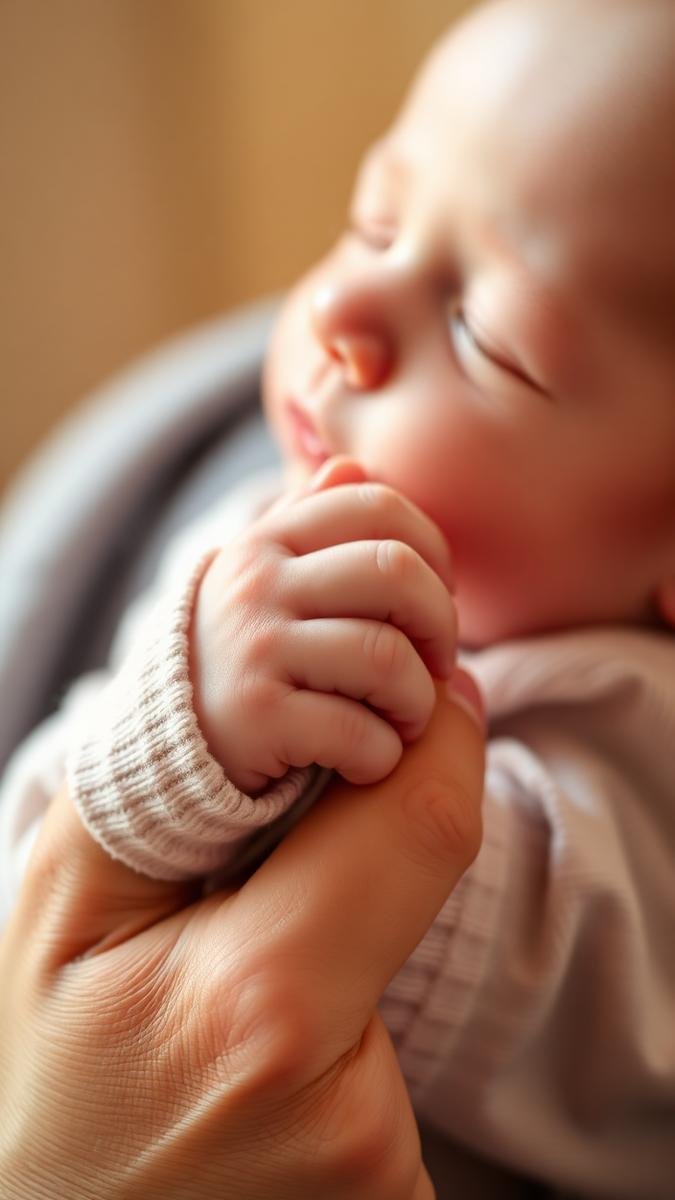
Place your finger in your baby’s palm and they’ll curl their fingers around it with surprising strength. This grip is so strong that some newborns can briefly support their own weight! The grasp reflex is replaced by voluntary reaching and grasping around 4–6 months.
Plantar Grasp Reflex
When it appears: Birth
When it disappears: 9–12 months
Specifically, stroke the bottom of your baby’s foot and their toes curl inward. This reflex disappears around the time your baby starts standing and walking independently.
Stepping Reflex
When it appears: Birth
When it disappears: 2–3 months
Hold your baby upright with their feet touching a flat surface and they’ll take steps as if they’re walking. This reflex disappears around 2–3 months and reappears as voluntary walking 9–18 months later. Contrary to popular belief, the stepping reflex has no correlation with when a child will walk.
Other Important Reflexes
- Tonic Neck Reflex (Fencing Reflex): When your baby’s head turns to one side, the arm and leg on that side extend while the opposite limbs bend. Appears at birth, disappears by 5–7 months.
- Babinski Reflex: Stroke the sole of your baby’s foot and their big toe bends back while the other toes fan out. Disappears around 12–24 months.
- Galant Reflex: Stroke along one side of your baby’s spine and their hip will curve toward that side. Disappears by 4–6 months.
When to Call Your Pediatrician
Additionally, while variations in reflexes are usually normal, contact your pediatrician if you notice:
- Absent reflexes on one side of the body (asymmetrical response)
- Reflexes that persist well beyond the typical age of disappearance
- Complete absence of normal newborn reflexes
- Unusual muscle tone (stiffness or floppiness)
- Your baby seems to have difficulty feeding or swallowing
Frequently Asked Questions
Why does my baby startle so easily?
The Moro reflex is exaggerated in the first weeks. Swaddling can help reduce startles during sleep. The reflex peaks around 2 weeks and gradually diminishes.
Is the stepping reflex a sign baby will walk early?
No — the newborn stepping reflex is involuntary and unrelated to voluntary walking, which typically starts 9–18 months. Don’t read too much into it one way or the other.
What if my baby doesn’t have a strong grasp reflex?
However, a weak or absent grasp reflex on one side can indicate a nerve issue. A weak grasp on both sides is less concerning but worth mentioning to your pediatrician.
Can I “practice” reflexes with my baby?
Gentle, playful interaction is fine, but don’t try to force or “exercise” these reflexes. They happen naturally and disappear naturally. Focus on tummy time, talking, and responding to your baby’s cues.
How Pediatricians Test Reflexes at Well-Child Visits
At each well-child visit in the first year, your pediatrician will perform a quick neurological exam that includes checking several of these reflexes. Here’s what we’re looking for:
- Moro reflex: We gently support your baby’s head and allow it to drop back slightly (while supporting the neck). The baby should startle — arms out, then in. Present on both sides? Check.
- Rooting reflex: We stroke the corner of your baby’s mouth and cheek. They should turn toward the touch. This reflex weakens around 3–4 months.
- Palmar grasp: We place our finger in your baby’s palm. They should grip firmly. This should be equal on both sides.
- Tonic neck reflex: We turn your baby’s head to one side while they’re lying on their back. The arm and leg on that side should extend while the opposite limbs bend — the “fencing” posture.
- Plantar grasp: We stroke the ball of your baby’s foot. Their toes should curl downward.
- Babinski reflex: We stroke the outer edge of your baby’s foot from heel to toe. The big toe should extend upward and the other toes fan out. This normally disappears by age 2.
Moreover, these checks take about 30 seconds but give us a wealth of information about your baby’s neurological development. If a reflex is absent, asymmetrical, or persists beyond the expected timeframe, it may warrant further investigation — but in most cases, everything is developing normally.
What If a Reflex Doesn’t Disappear on Time?
When primitive reflexes persist beyond the age they should have integrated, it’s called “retained primitive reflexes.” This can sometimes be associated with developmental delays, coordination difficulties, or learning challenges later in childhood. However, the vast majority of children with a single retained reflex develop completely normally. If your pediatrician notices a retained reflex, they may:
- Monitor it at the next visit to see if it resolves spontaneously
- Recommend specific exercises to help integrate the reflex
- Refer to a pediatric neurologist or occupational therapist if concerns are significant
Retained reflexes are not a diagnosis in themselves — they’re a finding that may or may not have clinical significance. Your pediatrician will take the full picture into account.
Reflexes and Prematurity
Furthermore, premature babies may have different reflex timelines. Some reflexes (like the Moro reflex) may be weaker or absent in very premature infants because the nervous system isn’t fully developed. Other reflexes may appear and disappear on an adjusted-age schedule rather than a chronological-age schedule. If your baby was born prematurely, your pediatrician will likely use adjusted age when assessing reflexes and milestones.
Cultural and Ethnic Variations
It’s worth noting that some variations in newborn reflexes have been observed across different populations. For example, the Babinski reflex may persist slightly longer in some ethnic groups without any clinical significance. Always interpret reflex findings in the context of your baby’s overall development, not as isolated data points.
When to Worry About Newborn Movements
While newborn reflexes are normal, some movements warrant attention:
- Repetitive, rhythmic movements: Such as repeated head banging, body rocking, or hand flapping that persists beyond 6–8 months
- Seizure-like activity: Sustained rhythmic jerking, staring spells with unresponsiveness, or posturing (stiffening of the body)
- Involuntary twitching: Brief, shock-like jerks that occur repeatedly, especially if they cluster together
- Unusual eye movements: Eyes that roll back, flutter, or deviate to one side for prolonged periods
For example, when in doubt, record a video and show it to your pediatrician. Videos are incredibly helpful because we can see exactly what you’re describing.
Frequently Asked Questions (Continued)
What is the difference between a reflex and a tic?
Reflexes are involuntary responses present from birth that disappear within months. Tics are repetitive, involuntary movements or sounds that typically appear in early childhood (ages 4–7) and are a different phenomenon entirely.
Can I stimulate my baby’s reflexes to help them develop?
Gentle, natural interaction is all that’s needed. You don’t need to “practice” reflexes — they happen on their own. Focus on tummy time, talking, singing, and responding to your baby’s cues.
Why does my baby sometimes shake or tremble?
As a result, newborn tremors (fine shaking of the chin, hands, or feet) are common and usually normal. They typically stop when the limb is moved or held. This is different from seizures, which involve rhythmic, sustained movements that don’t stop when you hold the limb.
Primitive Reflexes and Developmental Milestones
There’s a fascinating relationship between the disappearance of primitive reflexes and the emergence of voluntary motor skills. As each reflex integrates (disappears), the corresponding voluntary movement becomes possible. For example:
- When the Moro reflex disappears around 2–5 months, voluntary reaching and grasping begin to emerge — the startle response no longer dominates the baby’s movement patterns.
- When the tonic neck reflex fades around 5–7 months, the baby can bring both hands together at the midline, a crucial skill for bilateral coordination, reaching for objects, and eventually crawling.
- When the palmar grasp reflex gives way around 4–6 months, the baby can voluntarily open and close their hands, transfer objects from one hand to another, and develop a pincer grasp.
- When the rooting reflex disappears, the baby can intentionally turn their head toward a sound or person, rather than reflexively turning toward any touch.
This process of reflex integration is happening silently in the background of your baby’s first year. You don’t need to do anything special to “help” it happen — it’s driven by brain maturation. However, plenty of tummy time, floor play, and opportunities for free movement support the natural progression.
What About Newborn Hiccups and Sneezing?
In addition, newborns hiccup frequently — it’s one of the most common concerns parents bring to pediatric visits. Hiccups in newborns are a reflex caused by spasms of the diaphragm, often triggered by overfeeding, swallowing air during feeding, or a sudden change in stomach temperature. They are completely harmless and usually resolve on their own within 5–10 minutes. You don’t need to do anything to stop them — they don’t bother your baby nearly as much as they bother you. If hiccups seem to occur with every feed, try burping more frequently and feeding in a more upright position.
Sneezing is also very common in newborns. It’s not necessarily a sign of a cold or allergy — babies have tiny nasal passages, and sneezing helps clear them. Newborns are also adjusting to breathing air (instead of amniotic fluid), and sneezing helps expel any residual fluid or mucus. As long as there’s no fever, difficulty breathing, or other signs of illness, frequent sneezing is normal.
When Reflexes Reappear in Adult Life
Some primitive reflexes that disappear in infancy can reappear later in life under certain conditions — typically when there’s damage to the frontal lobes of the brain (which normally inhibit these reflexes). Conditions like dementia, stroke, traumatic brain injury, or multiple sclerosis can cause the reappearance of reflexes like the Babinski sign, grasp reflex, or rooting reflex. In a healthy newborn, however, the presence of these reflexes is a sign of normal development.
The Bottom Line
Specifically, newborn reflexes are a window into your baby’s developing nervous system. Most are present at birth and fade over the first several months as voluntary movements take over. If you have any concerns about your baby’s reflexes — whether they seem absent, asymmetrical, or persisting too long — your pediatrician can assess them quickly at a well-child visit.
Read more: how to do drowsy but awake
This content is for informational purposes only and does not substitute professional medical advice. Always consult your pediatrician with concerns about your child’s development.
Additionally, Related: average total sleep hours newborn 0 to 3 months
Newborn Reflexes Explained: quick pediatrician summary
Most of the time this is a normal newborn or infant variation that settles on its own, and the job of a parent is to know the small number of red flags that change the plan. Watch feeding, breathing, alertness and wet diapers — those four tell you more than the symptom itself. Call your pediatrician the same day for fever in a baby under 3 months, laboured or fast breathing, refusal to feed, fewer wet diapers, unusual floppiness or sleepiness, or a symptom that is clearly getting worse rather than better.
Common mistakes parents make
- Treating a single measurement or one bad day as a trend instead of watching the pattern over several days.
- Trying several remedies at once, so it becomes impossible to tell what helped.
- Waiting for a convenient time to call when a red flag is already present — feeding, breathing and alertness changes are always worth a same-day call.
- Following advice from an unsourced social post rather than your own pediatrician, who knows your child’s history and growth curve.
Related guides from our pediatric team
- Newborn Stroller Safety: From Bassinet Attachments to Hot Days
- Newborn Visitors and Germs: A Practical Etiquette and Safety Guide
- Newborn Bath Safety: Water Temperature, Drowning Prevention, and Technique
- Tummy Time: The Complete Newborn Guide (0–3 Months)
- More expert answers in Pediatrician’s Corner
References and further reading
- AAP HealthyChildren: symptoms & when to call the doctor
- CDC child health & development
- NIH MedlinePlus infant and newborn care
Medical disclaimer
This article is for general education and is not a substitute for individual medical advice, diagnosis or treatment. Every child is different — talk to your own pediatrician about your baby, and seek urgent care for breathing difficulty, poor feeding, dehydration, unusual sleepiness, fever in an infant under 3 months, or any sudden change in your child’s condition.