Newborn Temperature Below 97°F: What Parents Should Do
Introduction: The Overlooked Danger
When parents think about dangerous temperatures in babies, they almost always think about fever. The internet is flooded with articles about what to do when a baby’s temperature hits 100.4°F. But here’s what most parents don’t realize: in newborns, a low temperature can be just as dangerous as a high one—and in some cases, even more so.
A sick newborn doesn’t always run hot. Sometimes, they run cold. When a baby’s immature immune system fights infection, it may not have the energy reserves to mount a fever. Instead, the temperature drops. This makes low body temperature one of the earliest—and most easily missed—signs of serious illness in young infants, including sepsis, a life-threatening bloodstream infection.
The problem? Low temperature is subtle. There’s no crying, no dramatic scene. A baby with a dropping temperature may simply seem sleepy, feed a little less, or feel cool to the touch. Parents often dismiss these signs as “normal newborn behavior” or attribute them to a cold room. By the time the temperature drops significantly, precious hours may have been lost.
This article is your complete guide to understanding, recognizing, and responding to low body temperature in newborns and young infants. Drawing on guidelines from the American Academy of Pediatrics (AAP), Merck Manuals, Cleveland Clinic, Healthline, and leading pediatric emergency protocols, we’ll cover:
Think of this as the companion piece to every fever article you’ve ever read—because in babies, cold can be just as deadly as heat.
What Is a Normal Temperature for a Baby?
Before you can recognize abnormal, you need to know what’s normal. And here’s the first surprise: “normal” depends on how you measure it.
Temperature Ranges by Measurement Method
| Method | Normal Range | Notes |
|---|---|---|
| **Rectal** | 97.9°F – 100.2°F (36.6°C – 37.9°C) | Most accurate for infants; gold standard |
| **Armpit (Axillary)** | 97.8°F – 99.5°F (36.5°C – 37.5°C) | Typically 0.5-1°F lower than rectal |
| **Ear (Tympanic)** | 96.4°F – 100.2°F (35.8°C – 37.9°C) | Less accurate under 6 months |
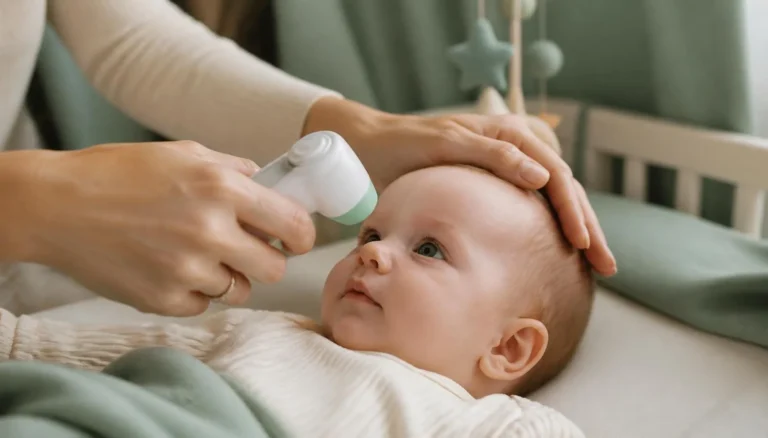
| **Forehead (Temporal)** | 97.5°F – 100.2°F (36.4°C – 37.9°C) | Convenient but can be affected by environment |
| **Mouth (Oral)** | 95.9°F – 99.5°F (35.5°C – 37.5°C) | Not recommended for infants |
Sources: Medical News Today, Health Partners, Texas Children’s Hospital
The Key Principle: Method Matters
A temperature of 97.5°F taken under the arm is very different from 97.5°F taken rectally. Because armpit temperatures run about 0.5-1°F lower than rectal, an armpit reading of 97.5°F could mean a rectal temperature of 98.0-98.5°F—completely normal.
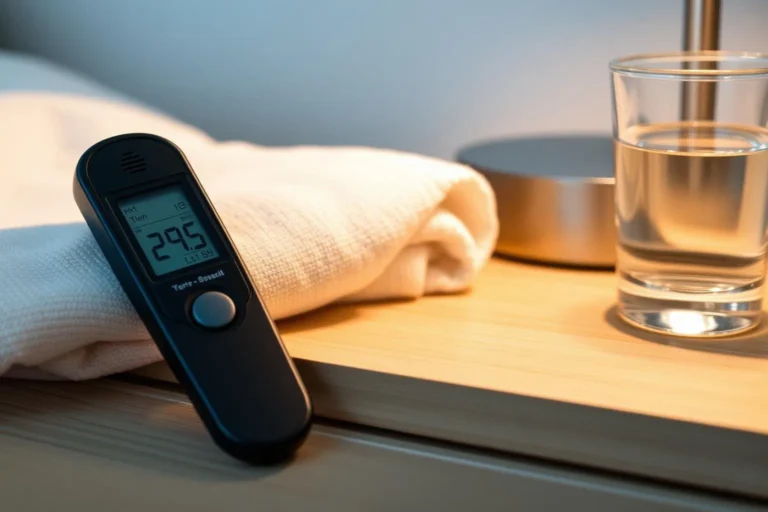
For newborns, rectal temperature is the gold standard. If you’re concerned about a low reading from another method, confirm with a rectal thermometer. Never use an armpit thermometer rectally or vice versa.
The Temperature Thresholds: A Parent’s Decision Guide
Here’s the framework you need to make decisions in real time. These thresholds are based on AAP guidelines, pediatric emergency protocols, and international standards (WHO, IMNCI).
The Complete Temperature Triage Table
| Temperature (Rectal) | Classification | Action Required |
|---|---|---|
| **Above 100.4°F (38°C)** | Fever | Call pediatrician same day (under 3 months: immediate evaluation) |
| **97.0°F – 97.8°F (36.1°C – 36.5°C)** | Low-normal / Cold stress | Warm baby, recheck in 15-20 minutes |
| **95.0°F – 96.9°F (35.0°C – 36.0°C)** | Mild to moderate hypothermia | Warm baby immediately; call pediatrician if not improving within 30 minutes |
| **Below 95°F (35°C)** | Severe hypothermia | **Go to ER immediately. Do NOT warm and wait.** |
Sources: AAP, Healthline, Babynama, Merck Manuals
Why the 97°F Threshold Matters
A temperature below 97°F (36.1°C) rectal is considered low for a newborn. While a single reading slightly below this in an otherwise healthy, full-term baby may simply indicate cold stress (easily correctable), it’s a signal to take action. Here’s why:
Why Newborns Are So Vulnerable to Cold
Understanding *why* babies get cold so easily helps you prevent problems before they start.
The Physiology of Newborn Temperature Regulation
Babies are essentially tiny heat-leaking machines. Several factors make them uniquely vulnerable:
| Factor | Why It Matters |
|---|---|
| **Large surface area-to-weight ratio** | Babies lose heat 4x faster than adults per unit of body weight |
| **Limited body fat** | Less insulation; preemies have almost none |
| **Thin skin** | Heat escapes easily through immature skin |
| **Immature hypothalamus** | The brain’s “thermostat” isn’t fully developed |
| **Inability to shiver effectively** | Can’t generate heat through muscle activity |
| **Limited brown fat** | Specialized heat-generating fat is minimal, especially in preemies |
| **Large head relative to body** | Significant heat loss through the head |
| **Limited movement** | Can’t crawl to a warmer spot or adjust blankets |
Sources: Cleveland Clinic, Janitri Health, St. Mary’s Healthcare
Cold Stress vs. Hypothermia: Know the Difference
Cold stress is the early stage where a baby’s body is working harder to maintain temperature but hasn’t yet failed. Signs include cool skin, mild lethargy, and slightly reduced feeding. It’s reversible with simple warming measures.
Hypothermia is when the body’s core temperature has dropped to dangerous levels and can no longer self-correct. It requires medical intervention and can lead to serious complications including low blood sugar, breathing problems, blood clotting disorders, and even death.
Signs Your Baby Is Too Cold: The Subtle Warnings
Newborn hypothermia doesn’t announce itself with drama. The signs are quiet, gradual, and easy to miss if you don’t know what to look for.
Early Signs (Cold Stress)
| Sign | What to Look For | Why It Happens |
|---|---|---|
| **Cool hands and feet** | Extremities feel cold to touch | Body redirects blood to vital organs |
| **Pale or mottled skin** | Skin looks patchy, pale, or has a marbled appearance | Reduced circulation to skin surface |
| **Decreased activity** | Less movement, less alert than usual | Body conserving energy |
| **Reduced feeding** | Falls asleep at breast/bottle, less vigorous sucking | Energy redirected from digestion to heat production |
| **Weak cry** | Cry sounds less forceful or urgent | Low energy levels |
Moderate Signs (Developing Hypothermia)
| Sign | What to Look For | Why It’s Concerning |
|---|---|---|
| **Cold chest or back** | Core body feels cool, not just extremities | Heat loss has reached central body |
| **Unusual sleepiness** | Hard to wake, very drowsy | Brain function slowing |
| **Blue lips or fingertips** | Cyanosis (bluish discoloration) | Poor oxygen circulation |
| **Slow breathing** | Breaths are shallow or slow | Metabolic rate dropping |
| **Refusing feeds** | Won’t latch or take bottle at all | Severe energy conservation |
Severe Signs (Medical Emergency)
| Sign | What to Look For | Action |
|---|---|---|
| **Temperature below 95°F (35°C)** | Confirmed by rectal thermometer | Go to ER immediately |
| **Limp or floppy body** | No muscle tone, rag-doll appearance | Call 911 |
| **Unresponsive** | Doesn’t wake to touch or voice | Call 911 |
| **Skin bright red** | Paradoxical sign in severe hypothermia | Call 911 |
| **Not breathing normally** | Very slow, irregular, or absent | Call 911, begin CPR if trained |
| **Grunting or nasal flaring** | Signs of respiratory distress | Go to ER immediately |
Sources: Healthline, Janitri Health, Merck Manuals, St. Mary’s Healthcare
Step-by-Step: What to Do If Your Baby’s Temperature Is Low
The response depends on *how low* the temperature is and *how your baby looks*. Follow this protocol carefully.
Scenario A: Temperature 95°F – 96.9°F (35.0°C – 36.0°C) — Mild to Moderate Hypothermia
This requires active rewarming, but you can start at home if baby is otherwise well.
Step 1: Verify the reading
Step 2: Move to a warm environment
Step 3: Remove cold/wet clothing
Step 4: Skin-to-skin contact (Kangaroo Care)
Step 5: Add layers
Step 6: Offer warm feeds
Step 7: Recheck temperature
Scenario B: Temperature Below 95°F (35°C) — Severe Hypothermia
This is a medical emergency. Do NOT attempt to treat at home.
Scenario C: Temperature 97°F – 97.8°F (36.1°C – 36.5°C) — Low-Normal / Cold Stress
This is the most common scenario and usually easily corrected.
What NOT to Do When Rewarming a Baby
Some well-intentioned actions can actually make things worse:
| Don’t Do This | Why It’s Dangerous |
|---|---|
| **Use heating pads or electric blankets** | Can cause severe burns; baby’s skin is thin and can’t sense overheating |
| **Use hot water bottles** | Risk of burns; temperature hard to control |
| **Place near radiator or space heater** | Risk of overheating and burns; dries out airways |
| **Give a hot bath** | Can cause rapid temperature shifts; wet hair continues cooling |
| **Rub baby’s skin vigorously** | Can damage delicate skin; doesn’t effectively warm core |
| **Overdress or over-bundle** | Can lead to overheating once baby warms up |
| **Give alcohol rubs** | Causes rapid surface cooling; dangerous for infants |
| **Warm and wait if temp is below 95°F** | Delaying medical care for severe hypothermia can be fatal |
Sources: AAP Patient Education, Merck Manuals, Cleveland Clinic
Common Causes of Low Temperature in Babies
Understanding the cause helps prevent recurrence and identifies when medical evaluation is needed.
Environmental Causes (Most Common)
| Cause | When It Happens | Prevention |
|---|---|---|
| **Cold room** | Winter months, air conditioning, drafty rooms | Keep room at 68-72°F (20-22°C); use room thermometer |
| **After bath** | Heat loss through wet skin and hair | Warm room before bath; dry immediately; dress quickly |
| **Wet clothing/diaper** | Leaky diaper, spit-up, drool | Change wet clothes promptly |
| **Underdressing** | Misjudging layers, seasonal transition | Dress baby in one more layer than you’re wearing |
| **Direct drafts** | Fans, open windows, air vents | Keep baby away from direct airflow |
| **Car seat in cold weather** | Cold car, wind exposure | Warm car before placing baby; use car seat cover (not under straps) |
Medical Causes (Require Evaluation)
| Cause | Other Signs | Action |
|---|---|---|
| **Sepsis (serious infection)** | Lethargy, poor feeding, weak cry, pale/blue skin | **Go to ER immediately** |
| **Hypoglycemia (low blood sugar)** | Jitteriness, poor feeding, lethargy, seizures | Call pediatrician immediately |
| **Prematurity** | Born before 37 weeks; may need incubator initially | Follow NICU discharge instructions closely |
| **Low birth weight** | Less body fat for insulation | Extra vigilance with temperature monitoring |
| **Thyroid problems** | Prolonged jaundice, constipation, poor feeding | Pediatric evaluation needed |
| **Intracranial hemorrhage** | Lethargy, abnormal breathing, bulging fontanelle | Emergency evaluation |
| **Drug withdrawal (NAS)** | Tremors, excessive crying, poor feeding | NICU/neonatology follow-up |
| **Maternal hypertension** | May affect baby’s temperature regulation | Postnatal monitoring |
Sources: Merck Manuals, Healthline, Janitri Health
Special Considerations for At-Risk Babies
Premature Babies
Preterm infants are at the highest risk for hypothermia:
For preemies at home:
Low Birth Weight Babies
Babies born under 5.5 lbs (2.5 kg) have:
Babies Born by Cesarean Section
C-section babies may have more difficulty regulating temperature initially due to:
Prevention: Keeping Your Baby Safely Warm
Room Temperature Guidelines
| Season | Recommended Room Temp | Tips |
|---|---|---|
| **Year-round** | 68-72°F (20-22°C) | Use a room thermometer; don’t guess |
| **Winter** | 68-70°F (20-21°C) | Avoid overheating with heavy blankets |
| **Summer** | 70-72°F (21-22°C) | Use AC cautiously; don’t direct airflow at baby |
Dressing Your Baby: The Layer Rule
The safest rule of thumb: Dress baby in one more layer than you’re wearing to be comfortable.
| Room Temp | Suggested Clothing |
|---|---|
| **Above 75°F (24°C)** | Light onesie |
| **70-75°F (21-24°C)** | Onesie + light sleep sack |
| **65-70°F (18-21°C)** | Onesie + footed sleeper + light sleep sack |
| **Below 65°F (18°C)** | Onesie + footed sleeper + warm sleep sack + hat |
Important: Hats should be worn indoors for newborns, especially in the first few weeks, because significant heat is lost through the head. Remove hats once baby is sleeping to reduce SIDS risk, unless the room is very cold.
Safe Sleep and Temperature
Bath Time Safety
Winter/Cold Weather Precautions
When to Seek Medical Help: The Complete Guide
Call Your Pediatrician Same Day If:
Go to the Emergency Room Immediately If:
Call 911 If:
Sources: AAP, Healthline, Babynama, Shoreline Pediatrics
Frequently Asked Questions (FAQs)
My baby’s hands and feet are cold, but their chest is warm. Is this okay?
Yes. Cold hands and feet are very common in newborns due to immature circulation. The important check is the chest or back. If these feel warm and baby is feeding well and alert, the core temperature is likely fine. If the chest feels cool, take a rectal temperature and follow the warming protocol.
What’s the best thermometer for checking a newborn’s temperature?
A digital rectal thermometer is the most accurate for infants and the gold standard for newborns. Armpit (axillary) thermometers are acceptable for screening but read 0.5-1°F lower. Ear and forehead thermometers are less reliable under 6 months. Never use mercury thermometers.
Can a baby get hypothermia indoors?
Absolutely. Hypothermia doesn’t require freezing temperatures. A room at 65°F (18°C), a wet diaper, or a draft from an air conditioner can be enough to drop a newborn’s temperature dangerously low—especially in the first few weeks of life.
Should I wake my baby to check their temperature?
Not routinely. If baby is sleeping peacefully in a warm room, appropriately dressed, and seems well when awake, there’s no need to disturb sleep for temperature checks. Do check if:
Is skin-to-skin contact really that effective?
Yes. Skin-to-skin (kangaroo care) is one of the most effective ways to warm a baby. Your body heat transfers directly to baby, and the contact helps regulate their temperature naturally. It’s recommended immediately after birth and can be used anytime baby seems cool. Hospitals worldwide use it as a primary warming method.
Can breastfeeding help warm a cold baby?
Yes. Breastfeeding provides warm milk, calories for heat production, and the physical closeness of skin-to-skin contact. If your baby is cool but awake and willing to feed, nursing is an excellent warming strategy.
What if my baby’s temperature is low but they seem fine?
“Seems fine” is exactly what makes low temperature dangerous in newborns. A baby with sepsis may simply appear sleepy or feed a little less—subtle signs that are easy to dismiss. If the rectal temperature is below 97°F, take action. If below 95°F, go to the ER regardless of how baby appears.
How often should I check my newborn’s temperature?
For healthy, full-term newborns at home, routine temperature checks aren’t necessary unless:
For premature or low-birth-weight babies, your pediatrician may recommend more frequent monitoring.
Can air conditioning cause low temperature in babies?
Yes. Direct airflow from air conditioners or fans can significantly increase heat loss. Keep AC at moderate levels, avoid directing airflow at baby’s sleep area, and dress baby appropriately for the cooled environment.
What’s the difference between a baby being cold and having hypothermia?
A baby who is “cold” has cool skin but a normal core temperature (above 97°F rectal). They respond to warming quickly. Hypothermia is a measured low core temperature (below 95°F rectal) that represents a failure of the body’s temperature regulation system and requires medical intervention.
Conclusion: Low Temperature Deserves High Attention
In the world of baby health, fever gets all the attention. But for newborns—especially in the first weeks of life—a low temperature can be just as dangerous, and far more insidious. It doesn’t announce itself with drama. It whispers with sleepiness, poor feeding, and cool skin. And by the time parents realize something is wrong, precious time may have been lost.
The key messages to remember:
Your baby’s body is learning to regulate itself. In those first weeks and months, your vigilance is their thermostat. Stay warm, stay watchful, and never hesitate to seek help when temperature drops.
Key Takeaways:
When to Call Your Pediatrician
Contact your pediatrician if you have concerns about your baby’s health, feeding, or development. If you believe your child has a medical emergency, call 911 or go to the nearest emergency department immediately.
This article is for general informational purposes only and is not a substitute for professional medical advice, diagnosis, or treatment. Always consult your pediatrician about your child’s individual health needs. If you believe your child has a medical emergency, call your local emergency number immediately.
Written by Dr. Chen, MD (Pediatrics) | Medically approved by Dr. Ahmed Raza, MD (Pediatrics) | Updated for 2026